

Share


I’ve partnered with Minerva Foods to share this practical manual so that you always choose the best red meat cuts with grilling in mind. Because we know that a good barbecue starts with the choice of cut and the quality of the meat. And believe me, with a few details I’ve learned over the years, you can make the difference between an ordinary barbecue and an unforgettable one.
What to pay attention to when buying red meat for the grill?
When people ask me how I choose meat, I always say you need to trust your senses: look, touch, and smell.
- Color: fresh meat should have a bright red color, neither too pale nor too dark.
- Texture: to the touch, depending on the cut, it should feel firm but not hard.
- Marbling: those white fat lines inside the meat are essential for the flavor and juiciness of the cut.
- Smell: it must smell.
- External fat: in some cuts, like striploin or goose tip, that outer layer of fat helps keep the juiciness during cooking, preventing excessive direct heat exposure and improving the cooking process. Leave the fat on during the barbecue and, if you want, remove it afterward.
Fatty cuts vs lean cuts: which work better on the grill?
On the grill, cuts with a bit more fat yield better results. I’m not talking about fatty meat, but cuts with good marbling or intramuscular fat, as this helps make the meat more tender and flavorful:
- Cuts with fat ideal for the grill: striploin, rump cap, chuck, tenderloin, tenderloin, spike tip and tenderloin.
- Lean cuts that can also perform well: fillet, rump, plateada (bottom round), and chuck ribs. But you need to be more careful with cooking to avoid drying them out.
Important: Don’t fear the fat. It’s what gives flavor to the meat. If you want to remove it afterward, that’s fine, but leave it on during the barbecue.
How to get tender, tasty meat?
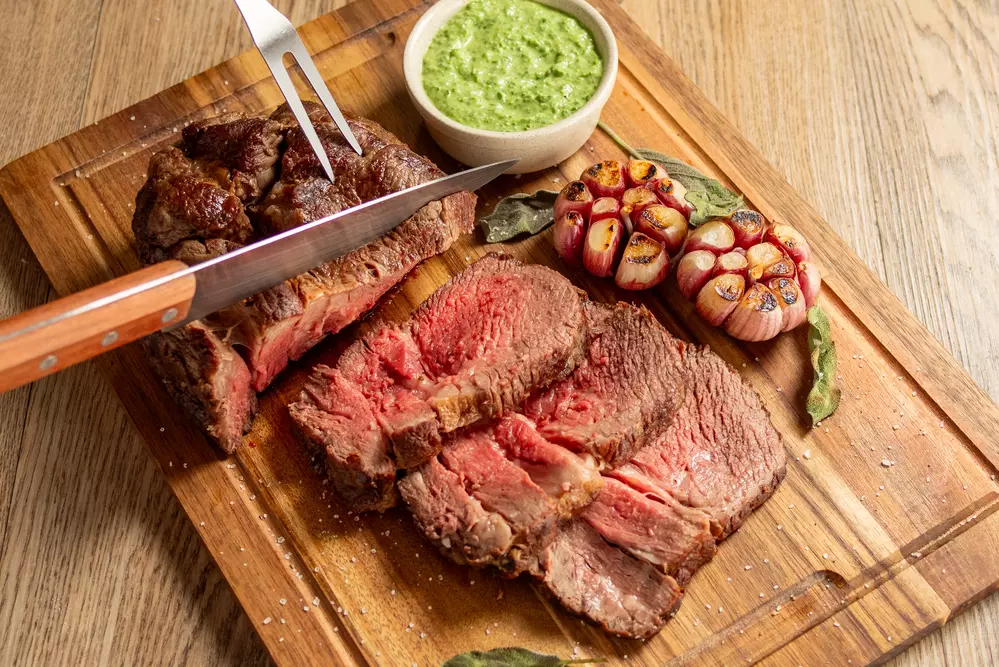
Photo: Minerva Foods
Low heat and patience! From personal experience, if you want the meat to be tender, juicy, and flavorful, low heat is your best ally. I’m not a fan of high heat that burns the outside and leaves the inside raw. I prefer a gentle and even ember that cooks slowly and allows the meat to properly soften. This kind of heat is ideal for large or bone-in cuts, like plateada (bottom round) or asado de tira (short ribs). The key is respecting the timing: don’t keep flipping the meat constantly, don’t pierce it, and move it as little as possible. This way, it cooks evenly and retains all its juices.
Choose according to the cut: each has its own way
Not all cuts behave the same on the grill, and it’s important to know that. Some require more time and low heat, others cook quickly and need a good sear.
- For slow cooking and low heat: short ribs, thin skirt, rump cap, plateada (bottom
round). If you give them the necessary time, they get very tender. - For faster cooking: tenderloin, ribeye, striploin and fillet. Here the key is to sear well
and watch the doneness.
Trust and quality: the most important when choosing meat
Over time, we realize that beyond the name of the cut, what really matters is the quality of the meat and where you buy it. If you’re going to make a good barbecue, make sure to start with a product well cared for from the origin.
The brands that have personally worked very well for me are those of Minerva Foods. If you want to surprise with a more gourmet meal, Cabaña Las Lilas is great; to celebrate with friends and family, Estancia 92; and PUL accompanies you in everyday preparations. Their meats have a high level of selection, good marbling, great flavor, and clear traceability. You can tell when you’re facing a well worked cut.
Barbecuing is more than just cooking. It’s a process that begins with choosing the cut and continues to the table, at serving time. If you choose the meat well and respect the process, the result will always be superior. I hope this article helps you feel more confident for your next purchase and prepares you for a barbecue everyone will remember.