

Share


You maintain an impeccable running training routine, sleep eight hours a night and follow a balanced diet, but all of a sudden your legs feel as if they are made of lead. A pace that once felt comfortable becomes exhausting, and your heart rate shoots up within the first few kilometers.
This does not always happen because of overtraining (excessive training) or a lack of pre-race fitness. In some cases, the problem appears silently: iron deficiency without anemia.
Iron and ferritin: what are they?
According to the Swiss Medical Weekly, published by the Swiss Society of Sports Medicine, iron has multiple functions in more than 180 biochemical reactions in the body. The main mechanisms through which sports lead to iron deficiency are increased demand, greater iron loss and blocked absorption caused by hepcidin spikes (a hormone produced by the liver that controls the circulation of iron throughout the body).
To understand how iron deficiency can affect athletic performance, it is important to distinguish between three elements:
- Iron: a mineral needed to transport oxygen and produce energy. When it is lacking, the body may have greater difficulty sustaining physical effort, which can lead to fatigue, declining performance and slower recovery;
- Hemoglobin: a protein in red blood cells that carries oxygen from the lungs to the muscles and other tissues. If its levels fall, as occurs in iron-deficiency anemia, less oxygen reaches the muscles during exercise;
- Ferritin: a protein that stores iron and indicates the size of the body’s available reserves. Low levels may reveal that these stores are being depleted, even before anemia develops or hemoglobin levels fall.
How are athletes affected?
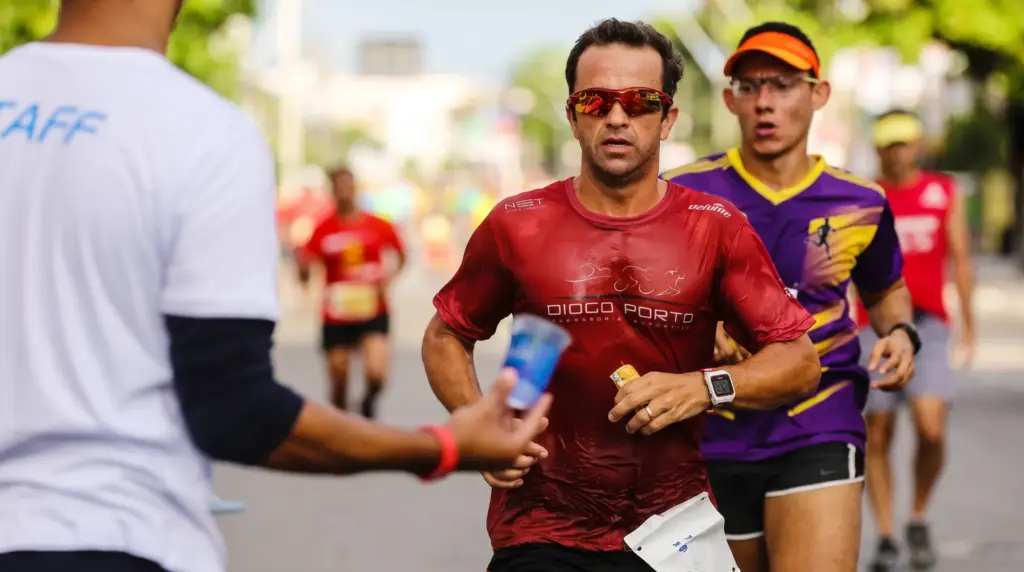
Iron deficiency is mainly triggered by the increased need for the mineral during training, its loss from the body and temporary absorption blocks caused by physical exertion itself. To monitor this level, routine blood tests — focusing on hemoglobin and serum ferritin levels — should be performed two to three times a year in athletes involved in endurance activities (when the body can sustain moderate or intense physical effort without excessive fatigue), such as long-distance running, road cycling, triathlon and open-water swimming, and at least twice a year for general individual monitoring.
In athletes aged 15 and over, ferritin levels below 30 mcg/l already indicate compromised stores, while the recommended threshold is 15 mcg/l for children aged 6 to 12 and 20 mcg/l for adolescents aged 12 to 15. One important exception involves elite athletes who will train at high altitudes, in which case the ideal level must reach at least 50 mcg/l to meet the body’s high demand.
Therefore, according to the Swiss Society of Sports Medicine consensus, declining iron levels significantly reduce the number of mitochondria and the activity of cellular respiratory enzymes, compromising the muscle’s oxidative capacity long before hemoglobin changes. This is isolated iron deficiency, not iron-deficiency anemia — which occurs when the mineral’s stores are exhausted and hemoglobin production plummets.
How can we lose iron while running?
Road running exposes the body to specific physiological stresses that accelerate the depletion of iron stores. Contrary to what many people think, mechanical impact is not the only culprit, and science describes very clear pathways for this loss:
Gastrointestinal tract microischemia (silent bleeding)
During prolonged, intense exercise, blood flow is severely diverted from the digestive system to the muscles in action. This temporary lack of blood supply to the intestinal mucosa can cause microlesions and small amounts of occult bleeding in the stool, representing the main mechanism of physical iron loss induced by sports.
Minor losses: urinary tract and sweat
Small amounts of iron may be eliminated through sweat and through microlesions that cause mild bleeding in the urinary tract (hematuria) after exertion. In absolute terms, however, these losses are considered statistically irrelevant as a sole cause of deficiency.
The myth of impact hemolysis (foot-strike)
Running causes the mechanical breakdown of red blood cells in the blood vessels in the soles of the feet due to repeated impact against the ground. However, the body recycles and fully reclaims all the components released, meaning there is no direct or net loss of iron through this process.
Hepcidin blockage and post-training inflammation
Intense or prolonged running sessions trigger a transient inflammatory response with elevated interleukin-6 (IL-6). This cytokine stimulates the liver to synthesize hepcidin, a hormone that degrades ferroportin channels in the intestine, temporarily blocking the absorption of dietary iron. According to research published in the Journal of Nutrition, intestinal iron absorption can fall by more than 35% in the three to six hours following a long workout, when hepcidin levels are elevated.
Menstrual losses
Ongoing blood loss from monthly menstrual flow is the leading cause of continuous iron loss in female athletes, making them the main at-risk group. According to a review published in the Journal of the International Society of Sports Nutrition (JISSN), the prevalence of depleted iron stores in female athletes ranges from 18% to 57% — reaching an impressive 50% specifically among long-distance runners. In addition, the literature indicates that most endurance athletes are able to meet their daily calorie and protein needs, but consistently fail to reach the recommended daily iron intake. This dietary gap, combined with periodic menstrual bleeding, acts as a turning point that dramatically accelerates the decline in ferritin.
Read also: The nutritional impact of removing meat from your plate
The Female Athlete Triad

Frequently mentioned behind the scenes of sports medicine, the Female Athlete Triad (or simply the Triad) is a clinical syndrome characterized by the interrelationship of three problems that occur along a spectrum of severity:
- Low Energy Availability (LEA): occurs when calorie intake from food is insufficient to cover training demands and the body’s basic vital functions, and may or may not be associated with eating disorders.
- Menstrual dysfunction: ranging from slightly irregular periods to the complete absence of menstruation for three or more consecutive months (amenorrhea).
- Compromised Bone Health: early weakening of the bones (ranging from osteopenia to osteoporosis) resulting from a lack of estrogen in the body, dramatically increasing the risk of stress injuries to the bones.
Iron deficiency has a close connection with this condition. A broad range of scientific research indicates that low iron levels, especially early depletion of ferritin, are often the first objective clinical indicator (“proxy”) that an athlete is experiencing low energy availability, serving as a warning sign long before the syndrome fully develops in the body.
Read also: The nutritional impact of removing meat from your plate
How can you reach your daily iron target with everyday foods?
For adult women of childbearing age, the standard recommended iron intake is 18 mg/day. However, if they engage in intense endurance activities (as athletes do), the demands of training require a higher intake — approximately 30% to 70% more, raising the daily need to between 23 mg and more than 30 mg, according to guidelines from the University of Washington and studies published on the U.S. National Library of Medicine’s PMC portal. For adult men, the recommended daily intake is only 8 mg/day.
To meet the recommendation without immediately resorting to supplements, diet is the best approach. The amount of the mineral in each 100 g of food varies according to official nutrition databases. Some examples include:
- Grilled beef liver: 5.80 mg.
- Tofu: 5.36 mg.
- Cooked lentils: 3.33 mg.
- Ground beef: 2.30 mg.
- Cooked black beans: 1.46 mg to 1.50 mg
Sources: Unicamp’s TACO Food Composition Table; USP’s TBCA Table; “The IRONy in Athletic Performance” study (PMC) and University of Washington Supplementation Guide
In addition to the amount of iron present in food, it is essential to consider how well the body can absorb the mineral. Iron from animal sources (heme iron) is much easier for the body to absorb. Estimates range from a typical absorption rate of 25% to a maximum potential of 40%.
By contrast, the absorption rate of plant-based (non-heme) iron varies considerably, from 2% to 20% — with one study reporting an average absorption rate of 17% in typical Western diets. In this case, the key is to consume it alongside sources of vitamin C (such as oranges, lemons or kiwis), which can increase mineral absorption by up to four times. Conversely, avoid dairy products (which are rich in calcium), coffee, and black or green tea in the same meal, as they reduce the body’s ability to use iron.
The body’s own adjustment factor
Scientific studies emphasize that absorption is not a fixed number, since the human body has an intelligent homeostatic regulatory system:
- If your stores are depleted: in individuals with severe iron deficiency (serum ferritin levels of around 10 μg/L), the body increases its absorption efficiency, raising the absorption rate of both forms (heme and non-heme) to as much as 40%.
- If your stores are full: when a person has adequate iron stores, the intestine drastically reduces the absorption rate (particularly of non-heme iron) to protect the organs from mineral toxicity caused by excess iron.
What should you do about fatigue?
When faced with unexplained fatigue, the smartest response for a runner is not to increase training volume, since this may worsen the situation by triggering new hepcidin spikes and deepening a hidden energy deficit in the body, but to have blood work done. Regular ferritin monitoring and fine-tuning the diet — focusing both on adequate calorie intake to prevent low energy availability and on strategic iron consumption alongside absorption enhancers such as vitamin C — are just as decisive for progress on the road as choosing the right shoes or following the training plan. Ensuring adequate iron stores protects the body, helps shield the skeleton from fractures and bone stress reactions — the risk of which can be three to five times higher in athletes with Triad-related imbalances — and allows true fitness to show up on the stopwatch, since optimizing this mineral has been proven to improve oxygen uptake capacity (VO2 max) and muscular energy efficiency with every stride.