Share


Beef provides complete proteins, heme iron, zinc, vitamin B12 and other nutrients. The ratio of muscle tissue to fat, however, is not the same in every cut of beef, since this composition is determined before cutting by factors such as genetics, age, diet, management practices and the natural distribution of tissues in the animal.
For this reason, comparing lean meat with marbled meat should not take into account only flavor or the amount of fat. Both options can meet different culinary goals and be part of a varied diet, provided that portion size, cooking method, side dishes and the overall dietary pattern are considered.
Lean red meat
Lean red meat is the portion that contains a lower proportion of fat relative to muscle tissue. This characteristic depends on the anatomical region selected from the animal, the natural distribution of fat and whether the external fat is removed or left on before consumption.
The term “lean,” therefore, does not mean that the meat is completely fat-free. Even portions with little external fat may contain some amount of intramuscular fat distributed between muscle bundles and fibers.
Top round, eye of round, inside round, outside round and beef shank are commonly used as options with lower amounts of visible fat, especially when the external fat is removed. This does not mean, however, that all examples of these cuts have identical compositions, since the natural ratio of muscle to fat also varies among animals.
Cooking also changes the composition of the portion consumed. Water loss during cooking can concentrate proteins, minerals and fat per 100 grams of meat, while some external fat may melt and be discarded. For this reason, values measured in raw meat should not automatically be applied to the cooked food.
The study Nutrient Analysis of Raw and Cooked USDA Prime Beef Cuts analyzed five cuts classified as “Prime” by the United States Department of Agriculture (USDA), both raw and cooked. The results showed differences in the amount of fat among the regions evaluated, while protein, zinc, vitamin B12 and other nutrients remained present in the lean portions analyzed. My Minerva Foods expands on this discussion in the article Lean red meat may contribute to heart protection in older adults.
What about marbled meat?
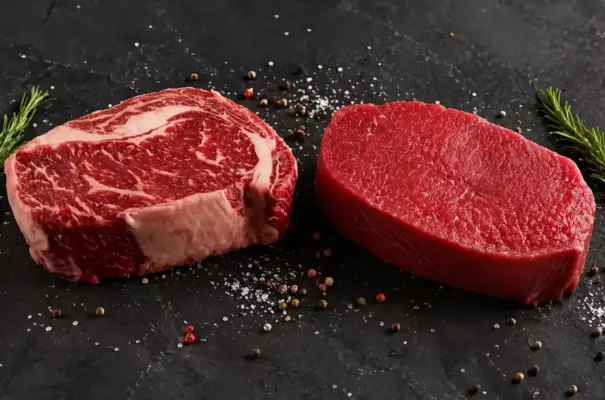
Marbled meat is meat that contains intramuscular fat visible as small spots or light lines distributed throughout the muscle. The name derives from the resemblance between this pattern and the veins found in marble.
Intramuscular fat differs from subcutaneous fat, which is located on the surface of the cut, and intermuscular fat, which is found between different muscles. Therefore, a cut with a large amount of external fat is not necessarily highly marbled.
Picanha, for example, is known primarily for its external fat cap. Cuts such as ancho, ribeye and some portions of strip steak may contain fat distributed within the tissue. The intensity of marbling, however, varies as a result of the interaction among genetics, breed, age, nutrition, management practices and the production system.
During heating, some of this fat contributes to the formation of compounds related to aroma and flavor and may increase the sensation of lubrication during chewing. For this reason, marbling is commonly associated with the perception of juiciness, flavor and tenderness. The result also depends on factors such as muscle structure, collagen, aging, temperature, cooking time and doneness (learn more in “From the grill to the pan: how to choose the best beef cuts”).
Nutritional differences between lean red meat and marbled meat
The main difference lies in the ratio of muscle tissue to fat. In general, a lean portion of red meat contains less total fat and has a lower energy density. Marbled meat, meanwhile, contains more intramuscular fat. This characteristic increases energy density and may alter the proportion of protein and fat per 100 grams, although the values depend on the cut analyzed, the degree of marbling and the cooking method.
What types of fat are found in beef?
Beef fat consists of different types of fatty acids, including saturated, monounsaturated and polyunsaturated fatty acids. Unsaturated fatty acids are divided into these two groups: monounsaturated fatty acids have one double bond in their chemical structure, while polyunsaturated fatty acids have two or more.
Among the monounsaturated fats found in meat is oleic acid, which is also present in olive oil. Polyunsaturated fats include fatty acids from the omega-6 and omega-3 families. The proportion of each type may vary depending on factors such as the animal’s diet, genetics and the composition of its adipose tissue.
This distinction is important because health recommendations consider not only the total amount of fat consumed, but also the predominant type of fatty acid in the diet.
The World Health Organization (WHO) recommends that saturated fatty acids provide no more than 10% of total dietary energy and advises replacing some of them with unsaturated fatty acids. The recommendation applies to the diet as a whole, not to the isolated exclusion of a particular food or cut.
Comparison table
Because two specific cuts, portions and preparation methods were not defined, the information represents general trends. The actual composition should be checked for the anatomical region and cooking method used.
| Characteristic compared | Lean red meat | Marbled meat |
| Natural proportion of muscle tissue | Generally has a higher proportion of muscle tissue relative to fat | May have a lower proportion of muscle tissue when the level of intramuscular fat is high |
| Total amount of fat | Generally contains less total fat | Generally contains more total fat |
| Amount of intramuscular fat | Contains a low or moderate amount of intramuscular fat | Contains a higher amount of intramuscular fat |
| Presence of external fat | May have an external fat cap, which can be removed before or after cooking | May or may not have external fat, since marbling and surface fat are different characteristics |
| Energy density | Generally provides less energy per equivalent portion | Generally provides more energy per equivalent portion |
| Protein proportion | May have a higher proportion of protein when there is less fat in the total weight | Still provides protein, but its proportion may be lower when the amount of fat is high |
| Presence of iron | Provides iron, including the heme form | Also provides iron, including the heme form |
| Presence of vitamin B12 | Provides vitamin B12 | Also provides vitamin B12 |
| Presence of zinc | Provides zinc | Also provides zinc |
| Influence on tenderness and juiciness | The result depends more on muscle characteristics and control of the cooking process | Marbling may enhance the perception of juiciness, flavor and tenderness |
| Culinary use | Can be used for grilling, roasting, braising or stewing. The most appropriate technique depends on the characteristics of the cut and the desired tenderness. | Can be prepared using different techniques, but is often valued for grilling and barbecuing, where intramuscular fat may contribute to the perception of juiciness, flavor and tenderness. |
| Whether the fat can be removed | External fat can be removed | Marbling cannot be removed before cooking without also removing part of the muscle tissue |
The comparison shows that lean meat makes it easier to control the total amount of fat and energy density. Marbling, meanwhile, may enhance valued sensory characteristics, but it does not by itself determine the tenderness or final quality of the preparation.
There is also no single nutritional composition for all beef. The study of USDA Prime cuts found differences among the cuts analyzed and showed that cooking changes nutrient concentrations, mainly by reducing the amount of water. The FoodData Central database, maintained by the USDA, contains specific records for different foods, fat proportions and cooking methods.
Which one is best suited to each profile?
Lean red meat may be more suitable for people who want to reduce the energy density of their meals or control their total fat intake. It makes it possible to obtain protein, iron, zinc and vitamin B12 with a lower proportion of fat, provided that the portion selected and the preparation method preserve this characteristic. This does not mean that its use is limited to weight loss or cardiovascular health. The outcome depends on total energy intake, side dishes, meal frequency and other lifestyle habits.
Marbled meat may be chosen when the culinary goal emphasizes flavor, juiciness and certain textures, especially in barbecues or quick preparations. Since it tends to have a higher energy density, portion size and the composition of the rest of the plate become more important.
Vegetables, leafy greens, beans, grains and other foods can complement the meal with fiber, vitamins and minerals. Thus, choosing between a lean portion and a marbled one becomes part of a broader decision about dietary variety and balance.
People who need to control their intake of saturated fat or energy, particularly those with changes in blood lipid levels, cardiovascular disease or metabolic conditions, should pay closer attention to portion size, frequency and the amount of fat present.
Individual choices, however, should not be based solely on the appearance of the cut. The assessment should take into account the overall dietary pattern, test results, nutritional goals and guidance from the professionals responsible for care.
Learn more: Does red meat cause cardiovascular disease?
What do scientific studies say?
The review Consumer Acceptability of Intramuscular Fat links intramuscular fat to the perception of flavor, juiciness and tenderness. The authors also show that acceptance is not universal, since it varies according to cultural habits, sensory preferences, previous experiences and nutritional concerns.
In the same vein, the review Fat Deposition and Fat Effects on Meat Quality explains that marbling contributes to sensory quality, but acts together with characteristics such as species, genetics, muscle structure, diet, management practices and processing. Therefore, the amount of intramuscular fat should not be used on its own to predict the final result.
The study Effects of Intramuscular Fat on Meat Quality and Its Regulation Mechanism in Tan Sheep found associations between intramuscular fat content, muscle fiber characteristics and flavor precursors. Since the research was conducted on sheep, its findings help explain biological mechanisms but should not be directly applied to all beef cuts.
In terms of nutritional composition, the study Nutrient Analysis of Raw and Cooked USDA Prime Beef Cuts found significant differences in the amount of fat among the regions evaluated. At the same time, the lean portion of all the cuts analyzed continued to provide protein and micronutrients such as zinc and vitamin B12.
Clinical trials also indicate that lean, unprocessed beef can be part of planned dietary patterns. In the study Effect of Varying Quantities of Lean Beef as Part of a Mediterranean-Style Dietary Pattern on Lipids and Lipoproteins, including up to 71 grams of lean beef per day did not negate the reduction in lipids and lipoproteins observed as part of a Mediterranean diet low in saturated fat. The result applies to the dietary pattern studied and should not be interpreted as authorization for unlimited consumption.
Taken together, the evidence shows that there is no single choice suitable for every meal. Lean meat makes it easier to control total fat and energy density, while marbling may contribute to flavor, juiciness and tenderness. The most appropriate decision considers the natural characteristics of the portion selected, the cooking method, portion size, frequency of consumption and the quality of the diet as a whole.
- My Minerva Foods — The secret of marbling in meat
- My Minerva Foods — What is behind beef quality?
- My Minerva Foods — Lean red meat may contribute to heart protection in older adults
- My Minerva Foods — Ten ways to maximize the benefits of beef
- Fat Deposition and Fat Effects on Meat Quality—A Review
- Consumer Acceptability of Intramuscular Fat
- Effects of Intramuscular Fat on Meat Quality and Its Regulation Mechanism in Tan Sheep
- Nutrient Analysis of Raw and Cooked USDA Prime Beef Cuts
- Effect of Varying Quantities of Lean Beef as Part of a Mediterranean-Style Dietary Pattern
- World Health Organization — Guideline on saturated fatty acids and trans-fatty acids
- United States Department of Agriculture — FoodData Central