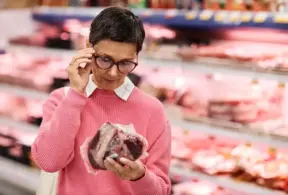
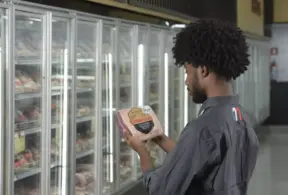
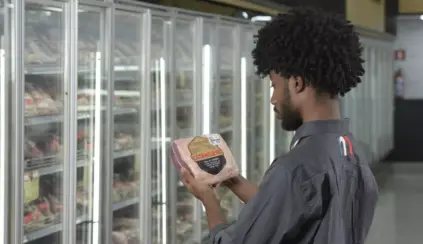
A U.S. study found that 77% of consumers base their purchasing decisions on the information provided on food labels.
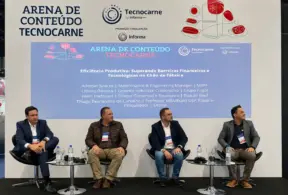
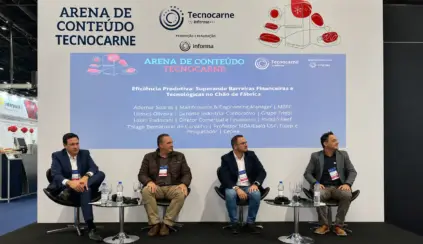
The event panel discussed how predictability, trust, market intelligence, and shared goals can help producers and industry players address sanitary requirements, global volatility, and competition for high-quality cattle.
From the impact of online betting on household budgets to the potential for expanding protein consumption in emerging markets, the trends reshaping the sector were the focus of discussions at Tecnocarne.
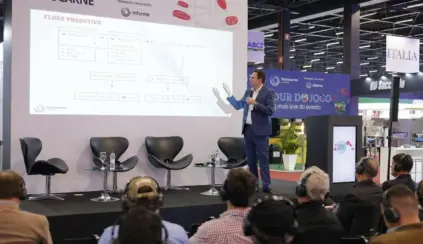
A study presented by Thiago Bernardino, researcher at Cepea and the University of São Paulo (USP), shows that logistics, consumption patterns, exports, governance, and financial flows influence the efficiency of the livestock ecosystem.
The new guidelines establish targets for high-quality protein consumption through 2030, with beef positioned at the center of this agenda.
The international certification granted by the World Organisation for Animal Health marks a new sanitary milestone for Brazilian livestock production and is expected to expand opportunities in global trade.
Geopolitics, regulatory changes, and consumer behavior trends are reshaping the dynamics of the global livestock market.
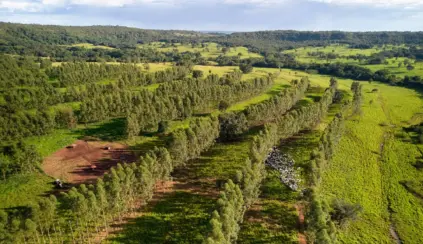
Environmental targets and production must be aligned for the country to negotiate with the world. Existing and proposed laws aim to sustain this synergy.
More efficient Nellore cattle can consume up to 31.8% less feed in feedlots without compromising weight gain, according to a study by the Federal University of Uberlândia.
The European Union, the United States, and the Codex Alimentarius take different approaches, but all are based on the same principle: trace before you nourish.
Not all meat products require a nutrition facts table or a “high in fat” warning label. In Brazil, labeling regulations distinguish between fresh foods and processed products.
Understand how climate, technology, and people management are transforming the sector — and why the human factor is decisive in this equation.