
Share


What science says about meat and cardiac risk
For years, the discussion about healthy eating revolved around one question: “animal or plant origin?” Meat was accused; saturated fats condemned; plant-based proteins praised. But a growing body of scientific evidence indicates that this may have been, from the start, the wrong question. Contemporary research places another variable at the center of the debate: the difference between unprocessed (in natura) foods, processed foods and ultraprocessed foods.
What NOVA is and why it matters to the debate
The NOVA system, developed by epidemiologist Carlos Monteiro and his team at the University of São Paulo (USP) starting in 2009, classifies foods not by nutrient but by the degree and purpose of the industrial processing to which they were subjected, dividing them into groups. The logic is simple: the problem is not the isolated nutrient, but the food matrix and the additives that processing creates or introduces.
| Group 1 | Group 2 | Group 3 | Group 4 |
| Unprocessed or minimally processed | Culinary ingredients | Processed | Ultraprocessed |
| Fresh meats, fruits, vegetables, eggs, milk, nuts, fish | Salt, sugar, oils, vinegar, flour | Cheeses, preserves, cured meats, artisanal bread | Soft drinks, industrial processed cold cuts, filled cookies, instant noodles |
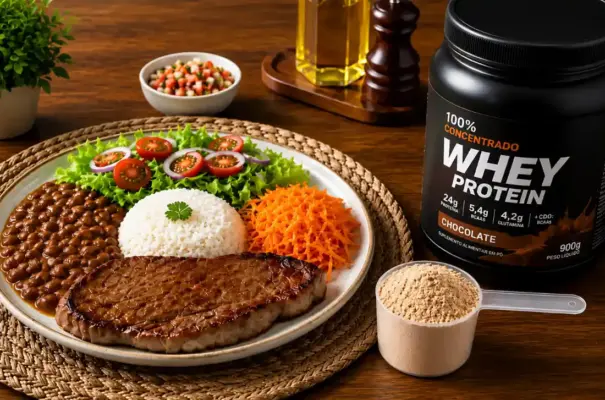
In this classification, fresh meat — beef, pork, chicken and fish — belongs to Group 1, alongside fruits, vegetables, eggs and milk. It is this group that public health guidelines recommend as the basis of an adequate diet.
What the most recent studies say

The volume of evidence on ultraprocessed foods and cardiovascular health has grown markedly over the past three years. A review published in The Lancet concluded that the most robust associations in the literature link high consumption of ultraprocessed foods to a greater risk of mortality, not only from cardiovascular diseases but from multiple diet-related chronic diseases, while the relationship of these diseases to consumption of unprocessed red meat is more related to the combination of dietary pattern and lifestyle than to isolated red meat intake.
Another study, also published in The Lancet, showed a positive association between consumption of ultraprocessed foods and the risk of cardiovascular disease, coronary heart disease and stroke. In the same vein, a meta-analysis published in the European Journal of Preventive Cardiology identified that people with higher consumption of ultraprocessed foods have a 19% greater risk of dying from heart disease compared to those who consume less.
A study published in Springer/Systematic Reviews, with data from 1.1 million participants and more than 173 thousand recorded deaths, concluded that the group with the highest consumption of ultraprocessed foods has a 15% higher risk of all-cause mortality compared to the group with the lowest consumption. And more: for each 10% increase in the proportion of ultraprocessed foods in the diet, the risk of death rises by 10%.
American Guidelines 2025-2030: the debate about fat
The Dietary Guidelines for Americans 2025-2030 demonstrate the complexity of the topic. The document retained the limit of saturated fat at less than 10% of daily calories, a recommendation that has remained unchanged for decades. But it introduced an unprecedented emphasis on “real food” (real food), listing meat, eggs, omega-3 rich fish, full-fat dairy, nuts, seeds and olive oil as sources of healthy fats. The premise of the official publication Real Food is to promote dietary patterns based on recognizable, minimally processed and nutrient-dense foods, with one of the central points being high-quality proteins combined with fats from whole foods.
Along the same lines, researchers from Vrije Universiteit Brussel, GAIN, Ghent University, Texas A&M and other institutions, in a study published in Animal Frontiers, propose an approach that simultaneously considers nutrient density and degree of processing when assessing diet quality. The central thesis: culturally appropriate diets based on minimally processed foods, including meats, dairy, vegetables and legumes, deliver a combination of high-quality protein, bioavailable micronutrients and a low additive burden that is difficult to replicate by dietary patterns dominated by ultraprocessed foods, even when those ultraprocessed products are plant-based.
Unprocessed meat: part of the problem or the solution?
The distinction between unprocessed meat and industrially processed meat is the most relevant point in the health debate. According to the NOVA classification, fresh meat belongs to Group 1 — the same as vegetables and fruits. Meanwhile, soft drinks and industrial snacks with preservatives, colorings and high sodium belong to Group 4.
This distinction has a direct impact on data interpretation. The Animal Frontiers review points precisely to this methodological limitation: studies based on dietary patterns that include minimally processed foods — among them, fresh meats, fish, nuts and full-fat dairy — are associated with lower risk of mortality and cardiovascular disease than patterns dominated by ultraprocessed foods.
The scientific message emerging from this body of evidence is one of reorientation:
The debate shifts from “animal versus plant meat” to “unprocessed versus ultraprocessed” — regardless of the food’s origin.
- A Clinician's Guide for Trending Cardiovascular Nutritional Controversies in 2026 — PMC
- A framework for adequate nourishment: balancing nutrient density and food processing levels — Animal Frontiers / Oxford Academic (2025)
- Dietary Guidelines for Americans 2025-2030: Progress on added sugar, protein hype, saturated fat contradictions — Harvard T.H. Chan / The Nutrition Source
- Does the concept of "ultra-processed foods" help inform dietary guidelines? — American Journal of Clinical Nutrition
- Exposure to ultra-processed food and risk of cardiovascular mortality — European Journal of Preventive Cardiology (2025)
- How Do the 2025-2030 Dietary Guidelines For Americans Measure Up For Cardiovascular Health? — American College of Cardiology
- Scientific Report of the 2025 Dietary Guidelines Advisory Committee — USDA/HHS
- The NOVA Method of Food Classification — News Medical
- Ultra-processed foods and all-cause mortality: understanding the NOVA classification — NYC Food Policy Center
- Ultra-processed foods and cardiovascular disease: three large US prospective cohorts — The Lancet Regional Health Americas (2024)
- Ultra-processed foods and human health: the main thesis and the evidence — The Lancet (2025)
- Ultra-processed foods and risk of all-cause mortality: updated systematic review and meta-analysis — Systematic Reviews / Springer (2025)