Share


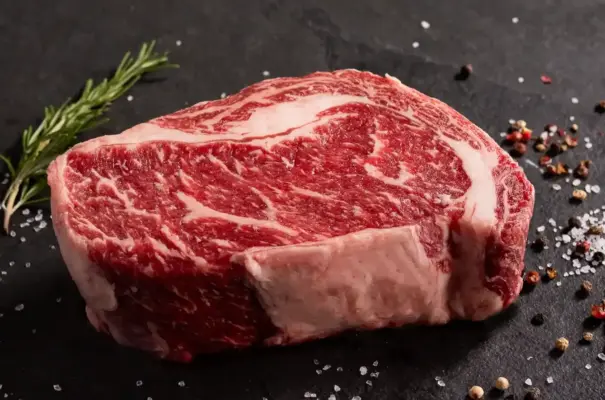
Intramuscular fat is deposited within the muscle, between muscle bundles and fibers. When it can be seen as small dots or light lines interspersed throughout the meat, it is called marbling because it resembles the veining found in marble.
It differs from subcutaneous fat, which is located on the surface of the carcass, and from intermuscular fat, found between different muscles. In addition, because it remains incorporated into the tissue, it cannot be completely removed before cooking in the same way as external fat.
The amount and distribution of marbling vary according to factors such as genetics, breed, age, feeding and management. My Minerva details these characteristics in the article The secret of marbling in meat.
Browse the content:
- Why is intramuscular fat in beef important for health?
- What does science say about intramuscular fat in beef?
- Who benefits from eating meat with intramuscular fat?
- How can intramuscular fat in beef be included in the diet?
- Myths and facts about intramuscular fat in beef
- Intramuscular fat affects the flavor of meat
- The more marbling, the better any meat will be
- Intramuscular fat can be removed before cooking
- Marbled meat also provides protein and minerals
Why is intramuscular fat in beef important for health?
From a nutritional standpoint, intramuscular fat contributes to the energy content and total fat content of the cut. It consists of different types of fatty acids. Monounsaturated and polyunsaturated fats play a role in functions such as the formation of cell membranes and, when they replace some saturated fats in the diet, may support cardiovascular health. Polyunsaturated fats also include omega-3 and omega-6 fatty acids, which are essential because the body cannot produce them in sufficient amounts. Saturated fats, when consumed in excess, may contribute to increased LDL cholesterol, commonly known as “bad cholesterol” because, at elevated levels, it can accumulate in the arteries and increase the risk of cardiovascular disease (learn more at Does red meat cause cardiovascular disease?).
Therefore, the location of fat within the muscle does not automatically make a cut healthier. The assessment must consider the amount consumed, the rest of the meal, consumption frequency and the overall dietary pattern.
In addition, cuts with different levels of marbling may have different fat contents. Data from Embrapa show that composition also varies according to genetic group, cut and cooking process. Therefore, it is not appropriate to assign the same nutritional profile to all beef.
What does science say about intramuscular fat in beef?
Research primarily links intramuscular fat to the sensory quality of meat. The scientific review Consumer Acceptability of Intramuscular Fat indicates that marbling may positively influence perceptions of flavor, tenderness and juiciness. However, preferences depend on the consumer, the cut and the cooking method.
During cooking, some of this fat changes and contributes to the release of compounds associated with aroma and flavor. It may also increase the sensation of lubrication during chewing, enhancing the perception of juiciness. Even so, marbling does not act alone, since aging, collagen, pH, temperature and cooking time also affect the result.
The review Factors Affecting Beef Quality and Nutrigenomics of Intramuscular Fat shows that the deposition of this fat results from the interaction of genetic, nutritional and production factors. Thus, two apparently similar cuts may have different levels of marbling and behave differently during cooking.
My Minerva also addresses this combination of factors in the article What lies behind beef quality?.
Who benefits from eating meat with intramuscular fat?
Consumers who value flavor, tenderness and juiciness may prefer cuts with more marbling, especially for quick preparations such as grilling and barbecuing.
However, the ideal level depends on personal preference and the purpose of the recipe. Meat with more marbling is not necessarily superior for every preparation, just as a leaner cut is not automatically of lower quality.
People who need to control their total fat or energy intake should consider the cut, portion and frequency of consumption. In these cases, it is possible to alternate between meats with different levels of marbling and choose preparations that fit into an individual dietary plan.
How to Cook Beef with Intramuscular Fat (Marbling)?
The choice should take into account both the nutritional composition and the desired culinary result. Cuts with more visible marbling generally work well in quick preparations at high temperatures, as the fat contributes to flavor and the perception of juiciness.
Cuts with less intramuscular fat can be prepared using techniques that help preserve moisture, such as slow cooking, stews and sauces. Therefore, the cooking technique should match the characteristics of each cut.
To understand how marbling and other components affect barbecuing, My Minerva presents the article What is the best meat for a barbecue?.
Myths and facts about intramuscular fat in beef
All fat in beef is the same
Myth. Fat may be located on the surface, between different muscles or within the muscle tissue. Intramuscular fat is distributed between the fibers and associated with visible marbling.
Intramuscular fat affects the flavor of meat
Fact. Research associates marbling with the perception of flavor, juiciness and tenderness. However, these characteristics also depend on the cut, the animal, aging and the cooking method.
The more marbling, the better any meat will be
Myth. Higher levels may enhance certain sensory characteristics, but they do not guarantee the best result for every cut or recipe. Consumer preference also influences this assessment.
Intramuscular fat can be removed before cooking
Myth. Because it is distributed within the muscle, it cannot be completely removed like external fat. To control intake, it is necessary to choose cuts with different levels of marbling and adjust portion sizes.
Marbled meat also provides protein and minerals
Fact. The presence of intramuscular fat does not eliminate the other nutrients in meat. The food continues to provide complete proteins, iron, zinc and vitamin B12, although the proportion of fat varies between cuts.