
Share


On October 14, National Livestock Day is celebrated throughout Brazil. According to the National Agriculture Society (SNA), the date aims to highlight the importance of Brazilian animal protein production not only to the country’s economic development, but also to global food security.
Consolidated data for the first quarter of 2026 from the Center for Advanced Studies in Applied Economics (Cepea), in partnership with the Brazilian Confederation of Agriculture and Livestock (CNA), estimates that Brazil’s agribusiness GDP will reach R$3.13 trillion this year. Of this amount, R$1.25 trillion corresponds to the livestock sector, which encompasses activities both inside and outside rural properties, such as production, industry, inputs and services. Over the past 40 years, national poultry production has increased 22-fold, mainly as a result of technical and technological advances.
But the importance of livestock farming is revealed not only in what reaches the plate or appears in economic statistics, but also in its presence in people’s daily lives. After all, have you ever thought about how many moments of your day this chain is present without you even noticing?
Part of the answer lies in using the animal from one end to the other, within the logic of a circular economy, in which resources take on new functions and remain in circulation instead of following the linear path of extraction, production and disposal. As noted by the scientific review published in the journal Animal Frontiers, redirecting animal-processing coproducts toward safe, higher-value uses is a central component of circularity in cattle production.
It is this process, often invisible to consumers, that helps explain how livestock farming extends into everyday life, far beyond food.
Livestock farming on your table
The most immediate association with livestock farming is the food on our plates. Beef, milk and dairy products such as cheese, yogurt and butter are among the foods found in Brazilians’ daily routines. However, the use of animals for food goes beyond in natura cuts.
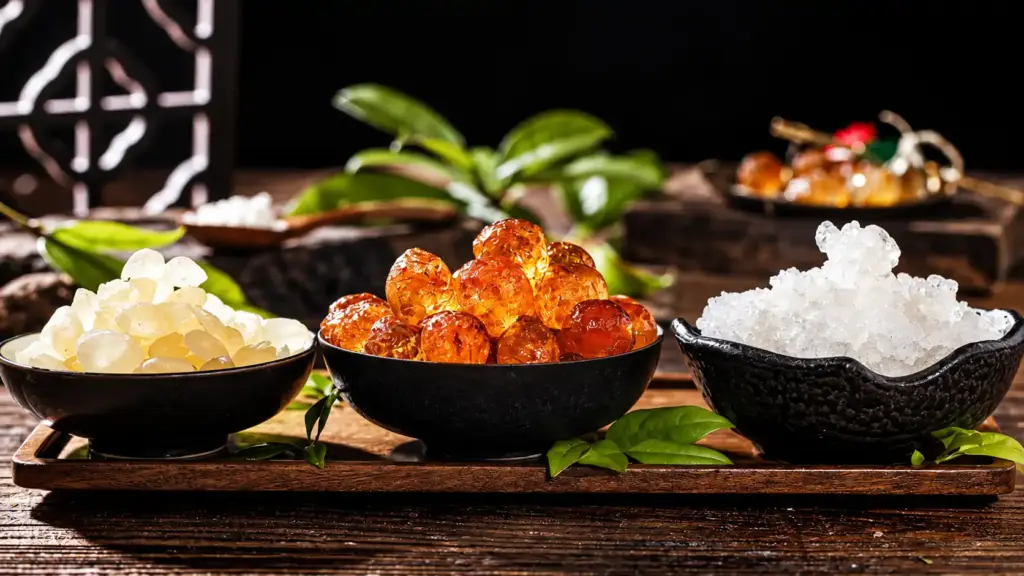
Bovine hides, cartilage and bones can be used to produce gelatin and collagen, ingredients found in desserts, supplements and medication capsules. The source varies according to each product’s formulation, but these examples show how materials that would not be consumed directly can re-enter the chain with a new function.
Bringing this diversity to the table requires the coordinated work of an extensive network of professionals: from farmers to animal scientists, as well as veterinarians, researchers, industry workers, truck drivers, health inspectors, retail professionals and people working in gastronomy.
Livestock farming in what you wear and use

Outside the food sector, bovine leather is one of the best-known examples of this use, as highlighted by the Regional Council of Veterinary Medicine of Mato Grosso do Sul (CRMV-MS). Durable and versatile, it can be used to make footwear, bags, belts, furniture upholstery and automotive interiors. Turning it into a raw material prevents the hide from being discarded and supplies industries ranging from fashion to vehicle manufacturing.
Beyond clothing, the transformation of coproducts adds significant value to everyday items. According to a technical survey by Embrapa Beef Cattle, bovine tissues can provide collagen for cosmetic formulations, such as facial creams and makeup, as well as pharmaceutical products. The review published in Animal Frontiers also identifies hides and bones as sources of food-grade and pharmaceutical gelatin, in addition to bovine cartilage used to obtain chondroitin, a natural component of human cartilage that helps retain water, provide elasticity and protect the joints, and is widely used as a supplement in capsules. This does not mean, however, that all products in these categories are animal-derived: raw materials vary according to the manufacturer and the formulation.
When a coproduct becomes a raw material
End-to-end use follows a practical logic based on health requirements and added value. The priority is to direct each material toward a safe use that can preserve or increase its value. Food applications come first; then pharmaceuticals, cosmetics and chemicals; followed by pet products and other industrial uses; and finally fertilizers and energy generation. There are approximately 250 by-products serving a range of industrial sectors
This model is known as the “value pyramid.” Rather than treating all remaining materials as equivalent waste, it considers their characteristics and seeks to direct them to the most useful application possible.
Industrial processing plays an important role in this process. Materials not intended for human consumption can undergo specific treatments and give rise to fats, proteins, minerals and other inputs. Their use, however, depends on health safety and the rules applicable to each product and purpose.
From fat to fuel
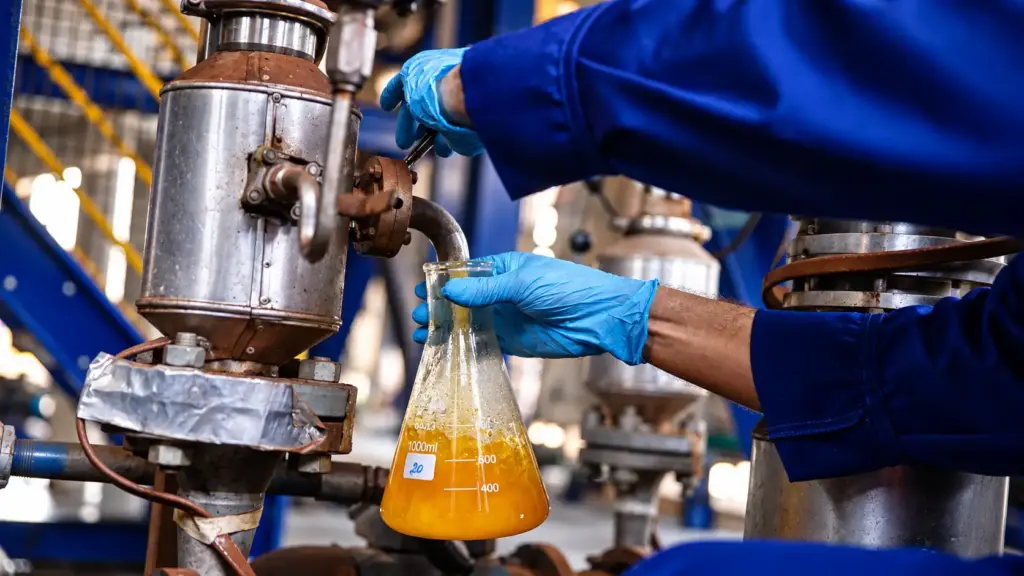
Materials of lower value to the food and pharmaceutical industries can still return to the economy through other routes. Beef tallow, for example, can be used to make soap and biodiesel. In this way, a fat resulting from processing can replace some of the raw materials that would otherwise have to be obtained from other sources.
Organic waste can also be directed to composting, anaerobic digestion, biofertilizer production or energy generation, depending on its characteristics and health regulations. This chain creates a connection between livestock farming, industry and agriculture: nutrients return to the soil, contribute to crop production and may re-enter the chain as food.
Closing this cycle does not happen automatically. It requires technical management to prevent contamination, nutrient losses and impacts on soil and water. A circular economy does not mean using any waste in any manner, but finding safe, technically viable and environmentally appropriate destinations.
From utilization to responsibility
Full utilization reduces waste, diversifies sources of revenue and decreases the need to extract new raw materials to perform specific functions. But circularity represents only one dimension of responsible production.
Celebrating National Livestock Day, therefore, means recognizing an activity that does not end in the field or on the plate. It can continue in the leather of a shoe, the gelatin in a capsule, the collagen in a cosmetic, soap, fertilizer and energy. Making these connections visible helps us understand how the responsible use of coproducts reduces waste, creates value and brings livestock farming closer to the principles of the circular economy — including when its presence goes unnoticed.
- October 14: National Livestock Day – CRMVMS
- The art of producing more with less in livestock farming: the bigger picture
- National Livestock Day – SNA
- Everything from cattle is put to use! – Embrapa Beef Cattle
- Brazilian Agribusiness GDP – Cepea/ESALQ
- Recommendations of the World Organisation for Animal Health (WOAH) – Ministry of Agriculture