
Share


The name itself highlights the concept’s foundation: regenerative agriculture. It represents a new paradigm for the relationship between human beings and the soil, one that seeks to go beyond maintaining the status quo. In other words, it is not merely about preventing degradation, but about reversing damage, restoring biological cycles and promoting balance in agroecosystems. The concept emerged, in fact, from the limitations of sustainability, which focuses on preserving natural resources, as observed by Jerome Irving Rodale when studying the regeneration processes of agricultural systems over time. Although the term was first used in 1979 by Medard Gabel in his book “Ho-ping: Food for Everyone,” according to a publication by the Embrapa Portal, it became widely known in 1986 after being popularized in the United States by Rodale.
At the end of the 1980s, regenerative agriculture declined, but it returned to the center of the environmental debate amid the climate change context, following the publication by the Rodale Institute of “Regenerative Organic Agriculture and Climate Change: A Down-to-Earth Solution to Global Warming” (or, in a free translation, “Regenerative Organic Agriculture and Climate Change: A Realistic Solution to Global Warming”).
Its arrival, evolution and consolidation in Brazil
In Brazil, the Novos Desafios Journal notes that, although the term has only recently gained the agribusiness spotlight, many of its practices have historically been used by Indigenous peoples, traditional communities and family farmers, often guided by necessity or ancestral wisdom.
As climate change has worsened, what was once traditional knowledge has evolved into a technological production system. Today, its consolidation in the country is taking place through the combination of science, technical assistance and socio-environmental action.
Regenerative cattle farming
As demonstrated by international reports from the Trust for Advancement of Agricultural Sciences (TAAS India), conventional agribusiness often separates crops and livestock. The regenerative approach, by contrast, integrates animals as vital components of the ecosystem. Accordingly, regenerative cattle farming follows the same principle: adopting mixed practices in the field that aim to restore and improve ecosystems while producing meat, milk and inputs, as defined by Embrapa. Examples of regenerative practices include:
- Crop rotation: growing different types of grains during each agricultural year promotes greater nutrient cycling in the soil, since different species explore different depths with their roots. In addition to leaving a positive residual effect in terms of carbon and organic matter for the next crop, this practice breaks the cycle of pests, diseases and weeds.
- Mechanical practices, such as creating physical barriers and using special plowing systems: the use of reduced soil preparation prevents compaction and the breakdown of soil structure. Physical barriers such as terraces, stone lines and water-harvesting systems cut across slope lines, reducing the speed and volume of runoff. This prevents erosion, promotes the deposition of nutrient-rich sediments in the soil and helps protect water bodies by reducing the siltation of rivers, streams and springs, decreasing the transport of sediments and nutrients into waterways and supporting aquifer recharge, thereby helping maintain water quality and availability over time.
- Soil management practices, such as remineralization and soil acidity correction: correcting acidity (such as through liming) neutralizes toxic elements such as aluminum and manganese, improves soil porosity and stimulates microbial activity for nitrogen fixation. Remineralization, meanwhile, is a way of accelerating the soil’s natural renewal through the use of rock dust. By continuously releasing nutrients, it corrects pH (acidity) and forms new clay minerals that profoundly activate biological processes and the symbiotic interaction between plants and microorganisms.
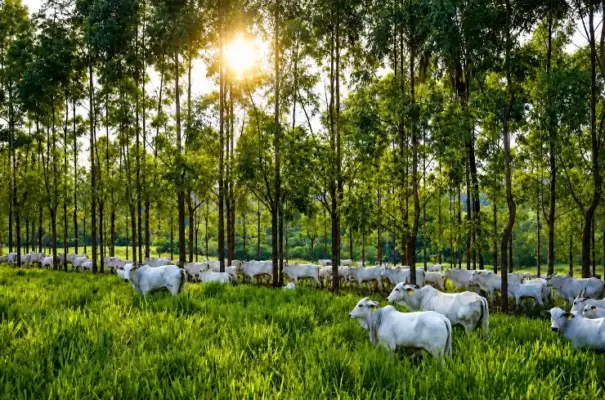
- Crop-Livestock-Forest Integration (ILPF): simultaneously growing trees, crops and/or raising animals in the same area restores degraded pastures and soils because it accelerates nutrient cycling and establishes ecological corridors that are vital to biodiversity. In addition, tree shade provides thermal comfort and improves animal welfare, strengthening the system’s resilience and diversifying farm income.
- Vegetative practices, such as permanent cover, multispecies pastures and vegetated strips: the constant maintenance of soil cover (with crop residue or living plants) protects the surface against the direct impact of raindrops. This helps reduce surface runoff, conserve moisture and increase organic matter and soil particle structure. Together, these strategies conserve soil moisture and promote increases in organic matter and the formation of soil aggregates.
It is also worth mentioning practices associated with confinement systems, which allow, for example, animal waste to be reused on pastures, contributing to soil quality (See here how manure can become an agricultural input and energy source).
Read also: Shade that fattens cattle! Thermal comfort increases feed conversion
Climate resilience and natural biofertilization

One of the technical “secrets” behind regenerative cattle farming lies in biological nitrogen fixation (BNF) by legumes and water retention. Embrapa explains it in simple terms: it is the process through which nitrogen present in the atmosphere is converted into forms that plants can use.
As a result, nitrogen fertilizers can be replaced by this natural biological process, generating direct savings for producers and becoming a cash-flow strategy for farms. Integrating forage legumes into pastures allows producers to reduce purchases of urea and other synthetic fertilizers, whose prices are volatile and heavily affected by exchange rates. This “natural fertilizer factory” makes farms less dependent on external inputs, turning soil biology into a genuine financial asset. According to an estimate in the Embrapa 2023 Social Report, BNF in soybean crops generated savings of approximately R$38 billion on imports of nitrogen fertilizers in 2021. In 2022, savings reached R$72 billion due to the increase in nitrogen fertilizer prices, a result of the global context of war involving countries that produce these inputs. “In 2023, the impact returned to its already significant previous levels.”
In addition to generating savings, BNF raises the nutritional quality of pastures, directly benefiting animal health: because legumes are naturally rich in protein, they lead to greater and healthier weight gain. As a result, the production cycle is shortened and carcasses are of better quality (that is, they deliver greater weight gain, faster finishing and reduced metabolic stress).
Metabolic stress is reduced because the pasture’s high nutritional quality efficiently meets the cattle’s requirements, requiring less effort from the body to digest and seek food. Stressful situations force animals to expend considerable energy trying to maintain vital functions, which ultimately inhibits the gastrointestinal tract, reduces the production of growth hormones and weakens immunity. With a nutrient-rich, easily digestible diet, metabolism functions without overloading, allowing all physical and physiological energy to be preserved and directed toward weight gain and meat quality.
Fewer inputs, higher margins
One of the advantages of regenerative cattle farming is precisely the intelligent use of inputs in the field. This reduces demand for synthetic fertilizers, herbicides and chemical pesticides, leading to lower production costs. Consequently, it reduces financial vulnerability and contributes to greater profitability.
This article published in the University of São Paulo (USP) newspaper shows that biodiverse systems can be up to 30% more productive, while also reducing carbon footprints and improving soil conservation. According to Ricardo Abramovay, senior professor at the Institute of Advanced Studies (IEA), “regenerative cattle farming is based on looking at the animal, looking at people as social actors and looking at the life around them, in the ecosystem where they exist.”
Adopting regenerative practices is therefore an investment with measurable returns. Strategic markets such as the European Union have tightened import guidelines, particularly through anti-deforestation laws. Producers who adapt not only protect their access to these markets, but also capture the added value offered by premium consumers, as shown by consumer trends, consolidating Brazilian cattle farming as a regenerative and economically resilient powerhouse.
Ecosystem services
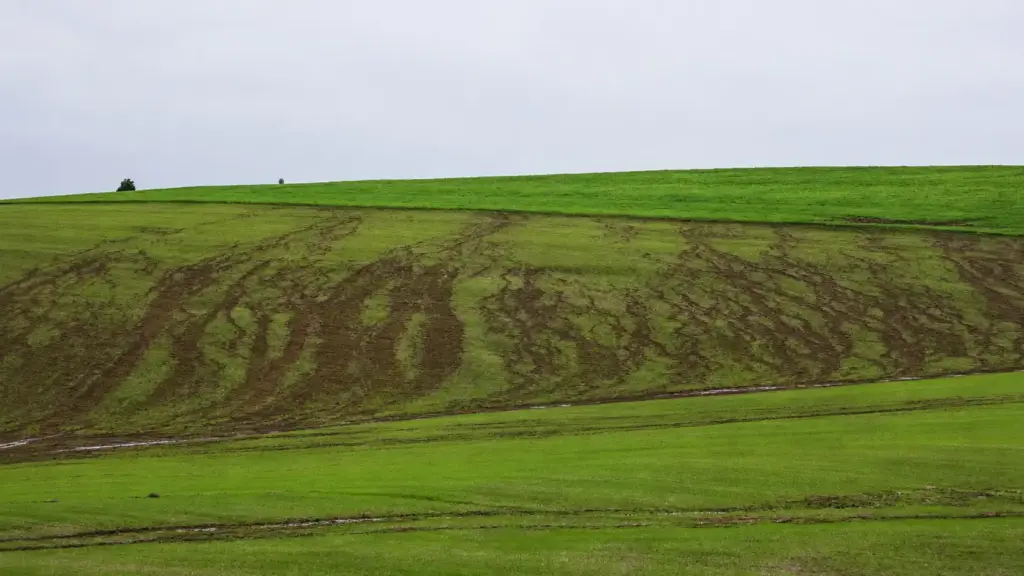
Failure to use sustainable practices such as these results in lower productivity, increased risk of pests, diseases and weeds, environmental imbalances, reduced agrobiodiversity and losses from soil erosion. In other words, traditional, undiversified systems limit operating margins and put the land’s productive potential at risk.
Furthermore, as the United Nations Environment Programme (UNEP) explains, monocultures and low crop diversification put global genetic diversity, ecosystem resilience and agricultural sustainability at risk.
The regenerative model, on the other hand, provides a range of ecosystem services that help reverse this degradation and protect both crops and livestock. At its core is the promotion of diversity among plant and animal species, genetic varieties and ecological functions, as well as the integration of these elements and cooperation among local stakeholders.
It was precisely to accelerate this transition that initiatives aimed at spreading regenerative practices among cattle producers emerged. In response to the need to engage rural producers in adopting sustainable, low-carbon practices, Minerva Foods developed the Renove Program in 2021. The initiative currently has certified farms in Brazil, Paraguay, Uruguay and Argentina and is structured around three pillars — green finance, training and technical assistance, and technical and institutional partnerships. The program supports the implementation of practices such as pasture recovery and rotation, integrated production systems, diversification of forage species and conservation of natural resources, helping make cattle farming more resilient, profitable and aligned with the demands of international markets.
- Regenerative Agriculture: one of the ways to curb the impacts of land-use conversion and climate change
- Brazil reaches a new level in beef exports
- Carbon credits turn sustainability into economic value in agribusiness
- Biological Nitrogen Fixation – Embrapa
- Regenerative cattle farming: a way to rethink meat production
- The Evolution of Agribusiness – Embrapa