Share


The recent confirmation of New World screwworm outbreaks (Cochliomyia hominivorax) in the United States and along the Mexican border has prompted the U.S. Department of Agriculture (USDA) to issue a red alert. Official data indicate that the current cattle herd has reached its lowest level since 1952, forcing the United States to import beef to keep the domestic market adequately supplied. The number of cattle has fallen 13% since 2019, reaching approximately 27.9 million.
Browse the content:
The spread of the so-called “Mexico plague,” however, is acting as a structural catalyst: the phenomenon is expected to drive Brazil’s beef exports to historic levels in the second half of 2026.
Understand the return of the “Phantom Plague”
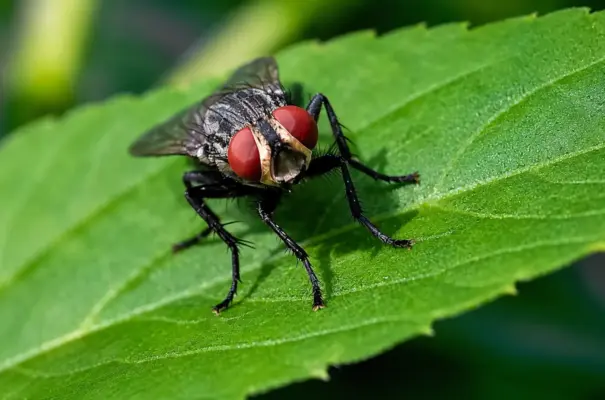
New World screwworm is not an unknown threat to U.S. cattle ranchers, but its reappearance represents a sanitary setback of alarming proportions. Caused by the larvae of the blowfly, which feed on the living tissue of warm-blooded animals, the infestation—also known as traumatic myiasis—can damage vital organs and kill animals within a few days if it is not treated quickly and aggressively.
As detailed by Brazil Journal, the movement of infested animals is the most common way the plague spreads, making livestock movement control a critical priority. The United States had eradicated the parasite from its domestic territory in 1966 and has since maintained a rigorous biological barrier in Central America, based on the release of sterile insects, to prevent the plague from being reintroduced from the south.
According to Exame Agro, the current outbreak is expected to make it even more difficult for the current administration to fulfill its plans to lower beef prices in the country. In April, ground beef, the main ingredient in hamburgers, reached a record price of US$6.90 per pound. This is the most alarming level ever recorded in the historical series of the Bureau of Labor Statistics (BLS), the agency that measures labor statistics in the United States.
How can Brazil benefit from this?
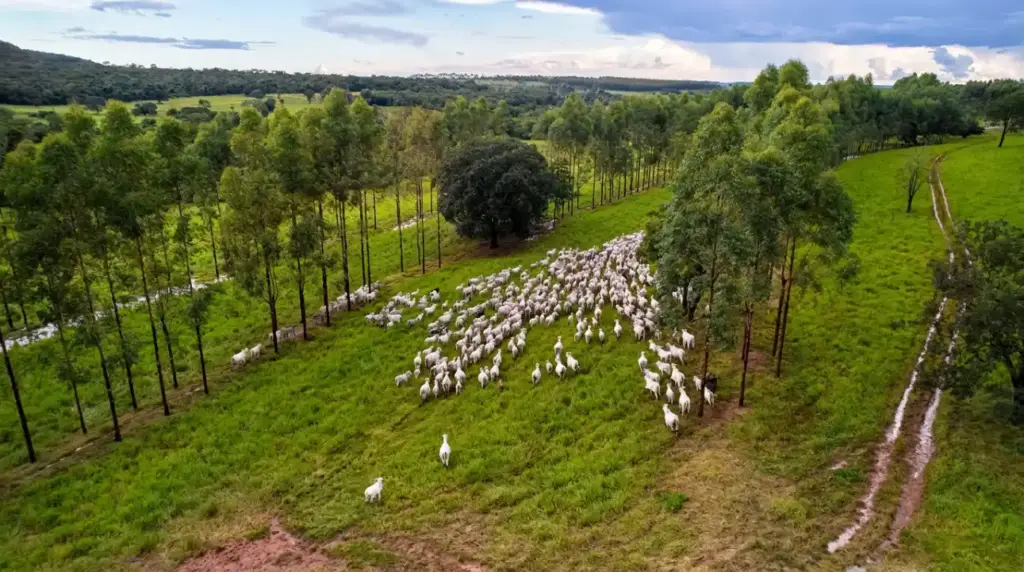
Amid this supply gap, Brazil’s agribusiness is positioning itself as a central and strategic player in the global market. Home to the world’s largest commercial cattle herd and posting successive productivity records, Brazil is experiencing the opposite of the U.S. situation, characterized by a high availability of animals for slaughter and a robust sanitary status, free from New World screwworm in its regulated exporting regions.
As Fernando Iglesias, a livestock specialist at consultancy Safras & Mercado, said in an interview with Exame Agro, the physical shortage of beef in the United States has reached such a severe level that the upward trend in purchases of Brazilian protein will remain unshakable throughout the second half of 2026, regardless of the success or speed of biological containment measures against the blowfly in Texas. “The outbreak worsens a situation that was already delicate. The supply of animals is very limited, and herd recovery will be slow. Therefore, regardless of the disease’s progression, the trend is for Brazil to continue expanding beef sales to the American market throughout this year.”
The need for U.S. processing companies and retail chains to fulfill their supply contracts is expected to lead the country to absorb the costs of the additional tariffs. As a result, the amount paid to Brazilian exporters will increase, expanding their margins. According to João Figueiredo, head of livestock at Datagro, the United States is expected to import approximately 200,000 additional tons, bringing the total volume to around 500,000 tons.
- O papel do Brasil na segurança alimentar global – My Minerva
- Por que o avanço da praga do México nos EUA deve aumentar a exportação de carne no Brasil – Exame
- Parasita mortal é detectado em gado nos EUA e ameaça produção de alimentos – CNN Brasil
- Um parasita ameaça o rebanho bovino (já reduzido) dos EUA – Brazil Journal